-
Subscribe
Subscribed
Already have a WordPress.com account? Log in now.
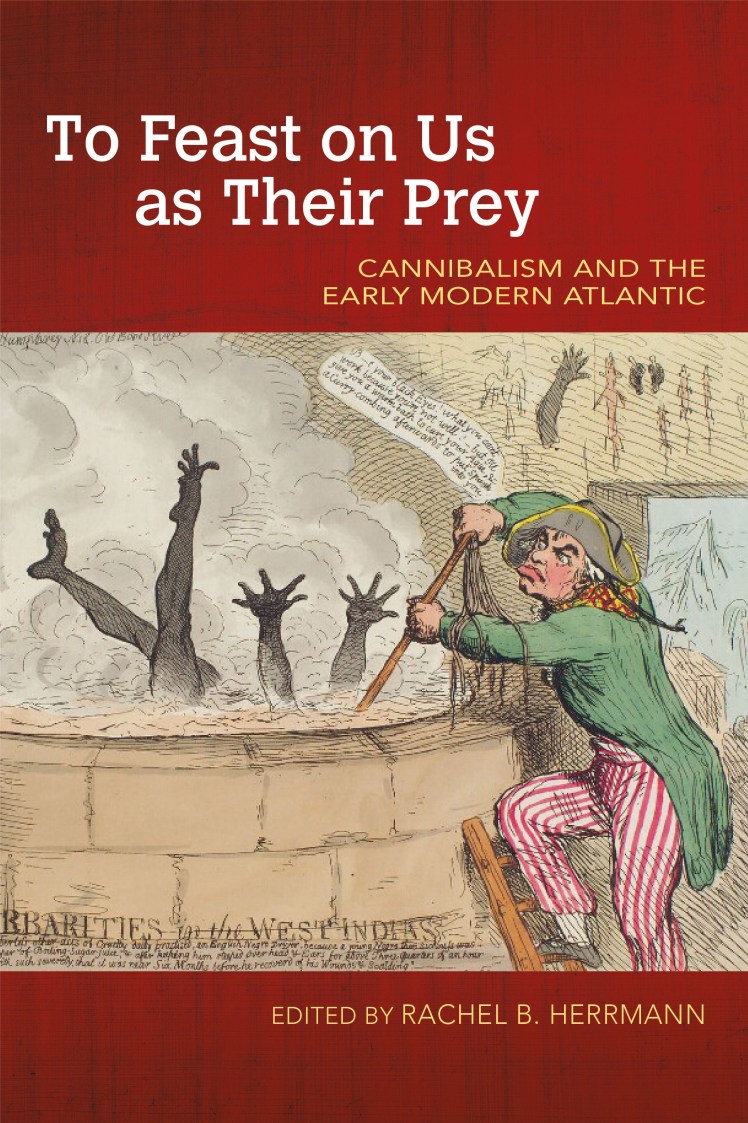 Rachel Herrmann’s interest in cannibalism grew from a paper she wrote as an undergraduate, which became a Master’s thesis, which became her first article. In the summer of 2015, a group of scholars gathered at the University of Southampton for a conference she organized, called “Cannibalism in the Early Modern Atlantic,” which was generously funded with a grant from the Wellcome Trust. William Kelso, Director of Archaeology for Jamestown Rediscovery, delivered the keynote address, in which he explained recent archaeological findings of bones bearing signs of cannibalism in colonial Jamestown, and his team’s use of forensic evidence. Participants were then urged to link cannibalism to Europeans’ quest for food, to stories about colonization, to Europeans’ interactions with Native Americans and Africans, to maritime famine, and to the Atlantic World paradigm. The most salient point emerging from the conference was that analyses of cannibalism now nearly always appear in combination with analyses of something else. In shifting from asking whether cannibalism occurred to querying why it mattered, scholars placed the study of man-eating in conversation with other topics such as literary theory, imperialism, the history of science, gender relations, and settler colonialism.
 Rachel B. Herrmann